Albino Lizard

There is a deeper meaning behind the mundane

  •     Getting up before dawn, eating some fruit, seeds and grain that I put to soak the night before, brushing my teeth and getting back in bed with nutrition in my tummy. This is year 25. I have been doing that for 19 days every March since becoming a devotee of Baha’u’llah.
        ;25 Years, I have belonged to Him. My inner being overflows with love when I consider 25 years of Baha’i fellowship, 25 years of insight and revelation from the Baha’i Writings, and especially, 25 years of personal love and guidance from Baha’u’llah Himself.
         On April 21, 1992, I had a mystical experience while reading an introductory pamphlet on the Baha’i Faith which I had picked up 2 days earlier from the Baha’i booth at a street fair. April 21 is one of the Baha’i Holy days, as I would learn later. 129 years prior to my vision of Baha’u’llah, in 1863, He had begun to declare His ministry to His followers in a garden across the Tigris River from Baghdad. Banished the second time for His radical views, He and His family were preparing for a journey to Constantinople (Edirne).
        In my first vision of Baha’u’llah, nearly 25 years ago, I saw Him in the Siyah-Chal. It was as if the pamphlet I was reading came equipped with a hologram that opened when you read of how Bahaullah, barefooted and bare headed in the heat of August of 1852 Tehran, being conducted to the dungeon, had paused and offered His face to an elderly woman who believed she was serving a meritorious cause by pelting Him with a stone. Then He was led down a long, dark flight of stairs to the dungeon, seated on a bench with robbers and murderers, tied up in chains, an exceedingly heavy chain around His neck, His feet, wounded from the long barefoot trek, soaking in garbage and excrement, and yet He had a mystical experience during the four months He was there.
        He experienced the call of God. He saw the Maid of Heaven and heard Her voice. She comforted Him with Her nurturing presence. She praised Him, imparting to Him the knowledge of His exalted Station, Manifestation of God for the current age.
        I saw His Face, the Light around Him, in a dark, somber place, nothing like the photos of Him you find on the internet, posted by non-Baha’is. I saw Beauty, I saw Love, I saw Majesty. And in that moment I knew that I belonged to Him forever.

  •     As I approached the Sacred Garden this morning, thinking to offer my usual mantra, my Lord appeared with a look that said, “Please don’t offer a meaningless repetition.” My spirit drank in the Holy Presence in a wordless meditation. The mind eventually began composing a summary of the experience.
        You must root out superstition from your belief system. It is easy to see it in others and difficult to see in yourself. Prayers and mantras prescribed by spiritual leaders are one thing. Sometimes they seem to connect you to pure Spirit and produce a big blessing. But not always. They can be over-relied on. The truly spiritual don’t need them.
        Behavioral dogma is another thing. Sometimes there is a time to do the forbidden. It took years for my husband to obtain his divorce, and yet I knew he and I were married. After 5 years we finally had our public wedding. I don’t drink alcoholic beverages but I do eat kimchee, sour kraut, miso and drink rejuvelac, knowing anything fermented has a trace of alcohol.
        Prayers and exhortations of my Faith are in Its Holy Texts. I have a phone app called, “Baha’i Daily Quotes,” which I enjoy. Reading the words penned by the Lord of your Faith is a kind of food. Still sometimes I don’t read them. Sometimes when I meet Baha’u’llah in the Sacred Garden, He asks me why I haven’t been reading His Words, then the next Passage I read is particularly meaningful.

  • I read, THE FORBIDDEN RELIGION by Jose M. Herrou Aragon.

    Available here

    I learned:


    • The material universe, including this material world, is hell.
    • The God of this universe, and this world, is Satan.
    • Satan has underlings that help him. The lord of the material earth is, Satan Kumara.
    • There is a Higher God and a Higher Realm. This God is shrouded in mystique. He is referred to as, God the Unknowable.
    • The god of this world (Satan) has worked to deceive people into confusing him with the Unknowable God.
    • The Unkowable God sends a Representative of Himself to earth on rare occasions at enormous sacrifice and pain to His Messenger. This Person inspires worship of the Unknowable God.
    • Religious truths and writings are twisted over time to direct people’s love and service away from the the True God to the false god. The false god has also created the illusion of a devil that is not himself.
    • The serpent, Lucifer, who spoke to Eve in the Garden of Eden, was the Messenger of the Unknowable God. He encouraged Eve to eat the fruit of the tree of Knowledge. The god of the world had commanded her and Adam not to eat the fruit of that tree, saying they would die. When Eve and Adam did eat the fruit, their eyes were opened and they knew the difference between the Uncreated Kingdom and the created realm. Their god had lied, they did not die. The serpent had told the truth, they had been made wise.
    • The god of this world created the body and the soul of man. A physical material part, the body of dust, and an animic part, the breath of this creator, which we call soul.
    • But there is a third part, an Uncreated and Eternal Spirit. That Spirit was asleep in Adam and Eve until they ate of the Tree of Knowledge. The god of this world prefers that that part remain asleep so people will accept him as God and he can feed on their passive spiritual energy.
    • The god of this world likes battles, wars, diseases, accidents, plagues, disasters and so forth, so he can feed on the misery of human beings. He likes animals to be slaughtered by humans and other animals so he can feed on their misery as well.
    • The imperfections of this world reflect the imperfections of its creator.
    • Gnosticism was persecuted and it’s writings destroyed early in the Christian Era. The only books on Gnosticism that survive are those written by its critics. The critics would have, in my opinion, highlighted the more shocking of the Gnostic beliefs and exaggerated them to make them appear absurd. With that filter I have mollified some of the ideas which I found difficult to reconcile with my existing belief system as follows:

    My Belief

        I don’t believe that the Perfect, Just, although Unknowable, God would have abandoned human beings into the care of a lunatic demigod. I do believe that Divine Messengers are sent every age or so. I believe there is a way that we can come into the Dicine presence right now. (Of course that would be through our relationship with the Messenger which Gnosticism also acknowledges).
        I don’t believe that the Unknowable God would have delegated the created universe to an arrogant, inept, perverse spirit without there being a way to improve on his ineptitude. Perhaps that is where we come in.
        I found The Forbidden Religion to be somewhat depressing to read. There are demons and devils everywhere and there is next to nothing we can do about it, is what I understood the writer to be emphasizing. I derived comfort from the following passage from the writings of Baha’u’llah:

    The comforting words of Baha’u’llah

        “Say: Beware, O people of Baha, lest the strong ones of the earth rob you of your strength, or they who rule the world fill you with fear. Put your trust in God, and commit your affairs to His keeping. He, verily, will, through the power of truth, render you victorious, and He, verily, is powerful to do what He willeth, and in His grasp are the reins of omnipotent might.”

    From the Writings of Baha’u’llah (Cited in Shoghi Effendi, “The Advent of Divine Justice

  • ​Everyone wants peace and prosperity. What we disagree on, sometimes, is how best to attain it.  By alienating each other, we are driving peace and universal prosperity father away. Does your vision of the future include everybody, or are you attracted to some kind of an elitist view that seeks to oppress certain strata of society while elevating the segment you hope to be in?


  • Suchness, the bitter taste of knowing such a one,
    a fire burning out of control,
    consuming everything.
    The breath, the focus within,
    perhaps all the fruit is not bitter.

  • Who Is the Biggest Quack?

        The medical-pharmaceutical industry has a tendency to steer patients to treatments and/or drugs that generate profits for the industry and those in it, while other treatments, that may be just as effective, less invasive, and less expensive, are not discussed. This is in part due to the education health care providers receive that tends to emphasize patentable treatments and drugs to the exclusion of medications, treatments or diets that have stood the test of time, but the patents have either expired, or they were not patentable in the first place. Care is taken, when discussing diet, not to buck the status-quo of industrialized foods by recommending a return to a pre-industrial diet. Great strides have been made in the successful rehabilitation of acute trauma, however the death toll from degenerative diseases has become epidemic. Cancer accounts for nearly one death in four, with diabetes being implicated in nearly one death in two.
        Sometimes the medical treatment is worse than the disease, with cancer patients seeming to succumb to surgery, radiation or chemotherapy more quickly than they perhaps would have from the cancer itself. Yet with all the research dollars being spent, the medical establishment still does not have a clear understanding of the cause of cancer.
        When a cancerous tumor, a fibrous or discolored lump in a person’s body that may have been judged by a medical doctor to be malignant, manages to send out some kind of a seed that starts another cancerous tumor growing in another area of the same person’s body, the cancer is said to have metastasized, a dangerous condition that can hasten death as the cancer continues to metastasize, colonizing more and more of the person’s body.
        Recently a spokesman for the National Institute of Health wrote: “Approximately 90% of all cancer deaths can be attributed to the metastatic spread of primary tumors…. Although our knowledge of cancer has increased in recent years, the molecular mechanisms of tumor invasion and metastasis still remain elusive.”
        Those who have put forth possible theories about the origin and development of the disease have been discredited by an establishment addicted to the profitability of its entrenched treatment program, even though the death rate is rather somber. There are survivors, and that tends to justify the cutting, burning and poisoning, as a few jackpot winners seem to justify gambling.
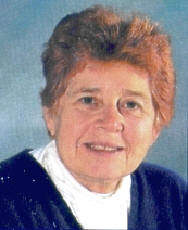
    hulda-clark

    Hulda Regehr Clark, Ph.D.,N.D.
        I first encountered the writings of Hulda Clark in 1997, shortly after losing a dear friend to cancer. My friend, undergoing chemotherapy, seemed to fade extremely fast. I couldn’t help but wonder how quickly she would have gone without the chemo. Would she have gone more quickly, or would she have had more time? Would her quality of life in the last months have been better without the side effects of the chemo? I had asked the same questions before when losing a boss to cancer 20 years earlier. He also had faded very quickly once the chemo had begun.
        I found, A Cure For All Diseases, and, A Cure For All Cancers, in the Herb Store. I bought one of them, I think it was, A Cure For All Cancers. In both books, Hulda Clark makes the startling assertion that all cancers, and indeed all diseases, are caused by parasites! You don’t hear much about parasites from medical science, at least not back then. I was startled and horrified! What if it is true? What if I have tiny worms chewing and biting me all over inside? My doctor would tell me wouldn’t she? She would give me something to get rid of them and I would be ok again, right?
        Hulda Clark was branded a quack by the medical establishment and persecuted. She died in 2009 of blood cancer at the age of 80, shortly after being awakened in the middle of the night to be arrested for her efforts in promoting health.
        The arms of the medical establishment denounce the work of Hulda Clark and other innovators of alternative medicine in paternalistic platitudes: “It is preposterous,” “There is just no evidence for it,” “Fasciolopsis Buski,” (The parasite Hulda Clark blames for cancer) “only exists in Asia. There are none here!” Indeed, in this age of world travel they are sure that the parasite stays in Asia?
        It seems to me that the idea of parasites causing cancer, with their reproductive activity being implicated in the phenomenon of metastation, is a better hypothesis then, “We don’t clearly understand metastation, all we can do is cut, burn, poison and hope for the best,” which is the position of establishment medicine.
        In 1999, I tried Hulda Clark’s recipe of herbs and a 9-volt battery powered device called a Zapper, which I built from the schematic in her book. The first thing I noticed was bouts of vertigo, that I had been suffering, went away. I had come to on the closet floor where I had passed out moments earlier, prior to treating myself, and this was not an isolated incident. I had been experiencing the vertigo more and more. But it vanished completely after undergoing Dr. Clark’s parasite program.
        Medical uniformed personnel are good at scaring patients into submitting to their protocols. However, their paternalistic assertions that one will benefit from the latest advances of Medical Science fall a little flat without the actual science. Their doctors die of cancer too, and many of them younger than 80. They charge for their services too, billing individuals, insurance companies and even governments. Their therapies kill people, but where are the statistics? I personally know several people who died while, or soon after, undergoing radiation or chemotherapy, and only one who survived it, and she was the only one, in a group of 30 cancer patients taking treatment together, to survive! Statistics are skewed, by changing the diagnostic categories before and after treatment, to make it appear that there is a greater cure rate, or a smaller death rate, then there is. They command us to ignore the alternatives because, “There is no evidence.” Where is the evidence that their way works?


  • I read, Walking on Eggshells by Lyssa Chapman and Lisa Wysocky, which I got on loan from the public library on my phone’s Kindle app via satellite. I was finished with the book in less than three days, not because it was particularly short, but because it was hard to put down. Lyssa and her co-author, Lisa Wysocky, did an excellent job making the book both readable and fascinating.
    I love recovery stories so much I should probably join AA or NA. The drinking and drugging I once did was done as part of my relationship addiction, which Lyssa also has, and worked through beautifully, both in real life and in the pages of her book..
    I wish everybody could hit bottom and turn away from drugs, alcohol, and abusive relationships forever! Some people wonder why alcoholics can’t learn to drink in moderation. Some counselors even mistakenly lead that direction. I did the same with one of my ex-husbands. I tried to get him to drink just a little and then stop. BIG MISTAKE!!! He was totally incapable of doing that. I finally gave it up myself and learned that I function much better when I don’t do drugs or alcohol at all, other than one or less Kombucha or equivalent per day. (But we had already broken up for the last time before I learned that.) My husband of the past decade and I both came to understand the importance and the benefits of the nonuse of drugs and alcohol decades prior to our meeting..
    Lyssa became famous near the end of her book by joining the reality show her dad and step-mother were in called, “Dog the Bounty Hunter,” in which he would do what had been his job for many years off camera, now for the camera: apprehend fugitives that he had bailed out of jail who failed to make their court appearances. Lyssa’s dad had been a bail bondsman at least from her childhood on..
    Lyssa’s mother and father broke up when she was small. They were both alcoholics and users. She did not see or hear from her mother until she was almost in her teens. Her dad got heavily into his addictions for awhile and she suffered from neglect..
    She explained how her dad had neglected her but had not abused her. As a result of the neglect, she had suffered abuse while living with her dad in Hawaii. A number of years later, while living with her mom in Alaska, she confided in a friend about the sexual abuse. The friend told the police. When the police interviewed Lyssa, she told them it happened in Hawaii. Both her mother and the police assumed it was her dad, and she didn’t correct them. As a result ishe became estranged from her dad for several years..
    Both Lyssa and her older sister, Barbara, had babies the same year. Lyssa was 15. They were both alcoholics, users and promiscuous from their early teens on (even younger in the case of Lyssa’s drug use).
    At the age of 14, when her baby was on the way, Lyssa tried to clean herself up, but without suitable role models she had a difficult time gaining permanent sobriety. Her step-mother, Beth, was firmly against drug and alcohol use and had helped Lyssa’s dad get clean and sober prior to the reality show. It is possible that Beth’s stern toughness helped Lyssa as well, although Lyssa didn’t particularly like it at times..
    When I finished the book I started reading Lyssa’s Facebook page. Lyssa, I wish you the BEST in your life of sobriety! If there is anything I can do for you, let me know!

  • Life Is A Beach (Well Almost)

        There was an email from WordPress, lesson one of my blogging course, asking, Who am I and what am I doing here? I’m here because I’m bashful. I don’t like striking up conversations with strangers. Fortunately my husband was the one who went out, flagged down the man driving by, and asked if he would give us a jump. I don’t know if I would have been able to do that. The man said he would be back. I thought, How picturesque, a truck on a lonely dirt road with its hood open and jumper cables hanging out. No sooner had I snapped the picture than the man was back to give us a jump.

        Somehow I feel more safe getting my social contact needs met by blogging than by trying to do it face to face. I know there is no logic in that. It’s just the way I am. Now I am at Sprouts waiting for my lover to finish eating so we can go to the beach. It is foggy outside, but it is only 9 am. First week of September, the kids are back in school. Probably the beach won’t be so full of people that you can hardly find a few square feet of space to take a dip, like it was the last few times we went..
        We met online. He wrote a message on my single’s page messenger (this was prior to Facebook) that consisted of his phone number only. Then I went to look at his profile again on David Wolf’s Nature’s First Law single’s page. I thought Jim was too young and too tall, although I found his geographical proximity very intriguing. He was in the town that borders my town to the Southeast. I had recently returned to my (mostly) grown children after a 10-month relationship with a Veggie-Date in Florida. That one didn’t work because he was addicted to antidepressants and was not able to get off even with my help, and my life felt like a merry-go-round going nowhere.
        Anyway Jimi, as I came to call him, had used an old picture on his Nature’s First Law profile. So even though his profile said he was 52, he just looked too young. He was pictured standing next to another man. I wasn’t sure which one was Jim. Was he the tall, well-built good-looking, young one, or the more portly, almost-as-young one? David’s singles page was for raw vegans, and raw vegans tend to age well. But I hadn’t aged THAT well myself, and besides I am 5 years older than him.
        When we finally met in person nearly a month later I thought, God, he’s gorgeous, I don’t stand a chance! But he kept hugging me as I introduced him to one of my favorite hiking and wilderness spots in my home town of Fallbrook, California. …
        We finished eating our fruit and nut breakfast a long time ago and are now shopping for a battery. I have a very unusual diet, and his diet is almost identical to mine. That sure comes in handy when you almost always eat together!
        My life partner was reluctant to pay top dollar for the battery. We finally found one at Walmart for a third the price the auto parts places were charging. Feel a little guilty buying from the exploiters of the wage-slaves that make the Walmart products, but we are very short on money and have some big expenses coming up. We have an afternoon and an evening engagement. No time for the beach after all. There’s always tomorrow!

  •     For most of the year 2015, and the first h half of 2016, Jimi and I were in an Edgar Cayce discussion group that met weekly at Drude’s retreat. One of the participants had taken the 10-day Vipassana meditation course at 29 Palms and had spoken glowingly about it.
        Jimi and I took the course in August of 2016. I, and about 59 other people, meditated daily for up to 12 hours. I spent about two thirds of that time in my room lying or sitting on the bed and the other third in the meditation hall on cushions on the floor. Sometimes I used a back support.
        We spent almost the first half of our meditating time focusing exclusively on our breath. Inhale exhale What is the sensation at the upper lip? On and on… Eventually, we got to the place where we were instructed to slowly scan our bodies with our awareness, looking for sensations, similar to what is generally known as Mindfulness Meditation. At the retreat, we were instructed not to use any mantras (mentally repeating a word or phrase while meditating) or visualizations, for the duration of the 10-days.
        I sat on a mat in a cross-legged position, and meditated on bodily sensations. We were encouraged not to fall into a trance state, and I think that maintaining the waking state while meditating is more beneficial, still any kind of meditation is better than none.
        There wasn’t much discussion of posture in the video presentations I watched at the Vipassana retreat, which were of talks given by S. N. Goenka, recorded at Vipassana workshops he had conducted prior to his passing in 2013. Goenka delivered his discourses seated in a chair with his wife also seated in a chair to his left. I never heard her speak. A row of experienced mediators were seated on meditation cushions inn the front row. You were free to see how they were sitting and emulate them if desired. I did not see anyone with their feet placed on their thighs. Most sat with their knees out to the sides and their ankles crossed in the center. I found that if I sat with one ankle over the other for any length of time the one on the bottom would go numb and then tingle in pain, so I placed one heel directly in front of my crotch and the other heal in front of the first ankle. I didn’t see anyone with their palms turned up on the knees. Hands were either relaxed in the lap or placed on the thighs or knees, palms down. Those who preferred sat in chairs. Some people’s knees were up off the mat a little, but I found that I stayed more comfortable during the one to two hour meditation sessions while resting my knees against the mat. A buckwheat hull meditation pillow under the pelvis helped accommodate this.
        Early in the course, during one of the hours of meditation in the hall, my hurt, angry heart melted in a flow of tears that lasted the entire hour.
        I enjoyed wholesome meals daily. I ate fruit for breakfast, usually oranges, apples and bananas. Once there was peaches. Other participants enjoyed oatmeal, bread, or granola with the fruit. I generally had a small serving of sunflower seeds with mine. I also had a cup of herbal tea with honey which I drank before starting to eat. There was also caffeine tea and instant coffee available, sugar, milk, yogurt and rice milk. Lunch was a variety of vegetable starches: beans, potatoes, both brown and white rice, salad and dressings. Cheese was available for the non-vegans. The bread and pasta served appeared to be mostly whole grain. There was also some kind of steamed vegetable. There was a gourmet main dish. Usually it was marked whether vegan or dairy. None of the menu choices contained meat or fish. Glutin-free or not was not always labeled, but after a brief and mild flare-up of my celiac condition, I limited myself to a small portion of the main dish, unless I could see wheat noodles or pasta in it, in which case I was content with just the salad, vegetable and brown rice, which, along with the white, was available every day. A raw fooder would find lettuce, raw shredded carrot and beet, chopped cucumber, celery, sunflower seeds and sunflower seed dressing. There were chop sticks available which, in my group, hardly anyone used. The lettuce was cut in long strips. Not sure how one would eat it without using chop sticks, but I was too busy eating to watch what others were doing. They did make a lot of clattering with their spoons and forks against their plates, except on the last day when we were at last allowed to talk, then all you could hear was the roar of many conversations going on at once. We did not communicate with one another for the first nine days of the course. We were like loners in the lunchroom and outside queuing up and serving ourselves, then sitting down and eating without communicating. The third meal was just tea, fruit and milk. There were cakes and cookies but I deserted most of the dessert except when there were slices of watermelon which I, of coarse, enjoyed.
        The meditation instruction consisted of audios and videos of S. N. Goenka (1924-2013). His talks were shown on two video displays, one on each side of the meditation hall, every evening. There was a different talk for every day of the course, recorded from a course he had directed in the English language. (There are courses conducted in other languages such as Spanish, Persian and Burmese.) On the women’s side of the hall, a woman teacher called us up once every few days to find out if we were successfully applying the teaching. It was the same on the men’s side, only the teacher was a man.
        The indoor spaces are all air conditioned. The meditation hall is kept quite cool. I enjoyed having a bathroom and shower in my single occupant room, a short walk from both the meditation hall and the dining hall. Some of the rooms do share plumbing though. I arrived at registration early (and I’m an elder). Even though it was quite hot outside in the California desert during August, I rarely used the air conditioner in the room. It seemed to remain comfortable with just the ceiling fan. (The room also contains a heater which I had no reason to use).
        “Last night I had the strangest dream,” by Woody Guthrie was the last song I sang before leaving for the Vipassana retreat. It was going through my head while I was there and still is. The words, “…I dreamed the world had all agreed to put an end to war… And when the paper was all signed and a million copies made…,” came to mind when I signed the agreement not to kill, not to steal, not to lie, not to commit sexual misconduct, and not to use intoxicants. I wondered if the first million people have signed that agreement yet. With Vipassana Centers all over the world that have been training 60 people every two weeks for decades, it does seem likely.
        Participants are not allowed to have any form of tobacco, drugs other than prescription, or alcohol during the 11 days we are at the center. Our cell phones were kept for us by an assistant teacher, and returned as we were leaving. What a nice break it was to be completely away from drinking and smoking!
        There is a schedule of rest periods during which we can walk a little walking path, one for woman and another for men. The women’s trail was pretty popular during the time I liked to go, early in the morning while it was still cool.
        I was trying to sit in the semi-lotus for an hour. After about a half hour my right knee started hurting. I didn’t try to push the pain away, I just paid attention to it. I remembered an old injury I had sustained in that knee. I could not get up the steps to the apartment where I was living with my two teens in the summer of 2003 without both hands on the rail, dragging my right leg up one step at a time behind my left, for several days, within a few weeks of our move from the family home.
        I want to forgive the people that committed atrocities against me. I have no power over their karma,. I can only stop the anger that surges up within me whenever I consider them or what I experienced at their hands. The body remembers even if the mind forgets.
        You have an aversion to being humiliated, so you become angry when you realize how badly you have been humiliated. As you watch the breath in meditation you are affirming your intrinsic nobility, and humiliation loses its power over you. I have been trying to find the root of my neuroses remembering all the pain that happened. I felt a shift. I am remembering the good things. I am remembering the joy. I am remembering the love. I am expecting good things.
        The hour goes by very slowly when there is pain. At first my back hurt, then that seemed to subside as I found my balanced position, then it was the hips and knees, especially the right knee. Now I can meditate longer without pain. Continuing for a little while against the pain lengthens the span of time that I can sit comfortably practicing mindfulness meditation.
        The person sitting directly behind me laughed loudly at one of S N Goenka’s jokes during the discourse. Not the first time this had happened. I was trying very hard to decipher Goenka’s thick accent and derive meaning from his words. The sudden, loud ejaculations directly behind me at what seemed like random times were unnerving, and at one point had me completely unglued. Her laugh was pleasant. Our little meditation mats were close together. I was turned a little to the side to face the TV. Her peals of laughter went right in my ear. Goenkaji was talking about the importance of both awareness and equanimity. I wanted to talk to the assistant teacher, which I felt was a better option than yelling out loud, “Could you put a lid on it? My ear is right here!” I realized I needed to calm down first. Then I realized I had lost my equanimity and this was exactly what Goenkaji was talking about! I chuckled silently, realizing that this had come up to help illustrate the principle I was learning. My anger was gone. Seeing the humor in the situation, I approached the assistant teacher when the break was called. I said, “The person behind me is laughing loudly. I lost my equanimity. I am craving for her to be more considerate.”
        Then the very next day it was another close neighbor, this time the person in front of me, who was bothering me. I thought, I am so glad this course is almost over because I wouldn’t be able to stand it if it were going on much longer! There it was, something to be grateful for, an affirmation to the impermanence of my current frustration. I felt my mood shift from tense and angry to happy and relaxed. But I wasn’t skilled enough to keep it. Soon the anger crept over me again.
        The wretched smell of hand sanitizer had been plaguing my nostrils throughout the day. When the lady sat down in front of me reeking of cheap perfume I hoped it would waft away as the day progressed. But every time she sat down quietly in front of me, at the beginning of every session, I could smell her arrival between closed eyes. After one of the breaks she entered the foyer to the meditation hall right after me. She stopped at a dispenser of hand sanitizer which was there on the shelf and infused both her hands and my air with the alcohols in that bottle. By evening I was ready to shove the entire bottle up her nose!
        Goenkaji had been discussing anger. He was explaining how to manage anger. He said you don’t just suppress it because that drives it down into the subconscious where it erupts later. The methods of anger management based on distraction don’t work. What you do is you somehow become totally aware of the anger but you don’t act on it.

        “Siddhartha Gotama [Buddha] gained enlightenment by discovering the root cause of craving and aversion, and by eradicating them where they arise, at the level of sensation. What he himself had done, he taught to others. He was not unique in teaching that one should come out of craving and aversion; even before him, this was taught in India. Neither is morality unique to the teaching of the Buddha, nor the development of control of one’s mind. Similarly, wisdom at the intellectual, emotional, or devotional levels also existed before the Buddha. The unique element in his teaching lies elsewhere, in his identifying physical sensation as the crucial point at which craving and aversion begin, and at which they must be eliminated. Unless one deals with sensations, one will be working only at a superficial level of the mind, while in the depths the old habit of reaction will continue. By learning to be aware of all the sensations within oneself and to remain equanimous towards them, one stops reactions where they start: one comes out of misery.” Day Six, The Discourses of S.N. Goenka.

        Stretched out on my bed during the break I could not figure out how to handle anger on the inside. Later, I learned from his book that the instant my nostrils pick up the smell of hand sanitizer is when I need to work on equanimity.
        Goenkaji kept saying, “equanimity,” earlier in the week with the accent on the second syllable. It flew by me the first twenty or thirty times in a Sanskrit-sounding salad of syllables that to me was completely unintelligible. The next day the teacher asked me was I developing eQUAnimity, also placing the accent on the second syllable, and I said, “Am I developing what?” She repeated it a little slower and I finally got it. “Yes, my emotions are getting calmer.”
        Goenkaji kept saying “Parami,” a foreign word that I had not heard defined. During the question and answer period at the end of the long day, I had asked the teacher, “Why does Goenka say these things are part of him?” She didn’t understand my question. “He said, ‘There’s ten parts of me. The first part of me is this..’”
        She said,”Oh no, that’s ‘Parami,’” and she spelled it and explained it. I was not able to hang on to the meaning, but memorized the spelling so I could look it up later.

    “There are ten good mental qualities—pāramī—that one must perfect to reach the final goal…
        “The first pāramī is nekkhamma—renunciation…. In a course like this, one has the opportunity to do so, [to develop this quality] since here one lives on the charity of others. Accepting whatever is offered as food, accommodation, or other facilities, one gradually develops the quality of renunciation…
        .”The next pāramī is sīla—morality. One tries to develop this pāramī by following the five precepts at all times, both during a course and in daily life. [“The Five Precepts: I undertake the rule of training to abstain from killing living creatures. I undertake the rule of training to abstain from taking what is not given. I undertake the rule of training to abstain from sexual misconduct. I undertake the rule of training to abstain from wrong speech. I undertake the rule of training to abstain from intoxicants, which are causes of intemperate behavior.” From Day Two Discourse in The Discourse Summaries of S.N. Goenka]….
        “Another pāramī is viriya—effort. In daily life one makes efforts, for example to earn one’s livelihood. Here, however, the effort is to purify the mind by remaining aware and equanimous. This is right effort, which leads to liberation.
    “Another pāramī is paññā—wisdom…. The real pāramī of wisdom is the understanding that develops within oneself, by one’s own experience in meditation. One realizes directly by self-observation the facts of impermanence, suffering, and egolessness. By this direct experience of reality one comes out of suffering.
        “Another pāramī is khanti—tolerance. At a course like this, working and living together in a group, one may find oneself becoming disturbed and irritated by the actions of another person. But soon one realizes that the person causing a disturbance is ignorant of what he is doing, or a sick person. The irritation goes away, and one feels only love and compassion for that person. One has started developing the quality of tolerance.
        “Another pāramī is sacca—truth. By practicing sīla one undertakes to maintain truthfulness at the vocal level. However, sacca must also be practiced in a deeper sense. Every step on the path must be a step with truth, from gross, apparent truth, to subtler truths, to ultimate truth. There is no room for imagination. One must always remain with the reality that one actually experiences at the present moment.
        “Another pāramī is adhiṭṭhāna—strong determination. When one starts a Vipassana course, one makes a determination to remain for the entire period of the course. One resolves to follow the precepts, the rule of silence, all the discipline of the course. After the introduction of the technique of Vipassana itself, one makes a strong determination to meditate for the entire hour during each group sitting without opening eyes, hands or legs. At a later stage on the path, this pāramī will be very important; when coming close to the final goal, one must be ready to sit without break until reaching liberation. For this purpose it is necessary to develop strong determination.
        “Another pāramī is mettā—pure, selfless love. In the past one tried to feel love and goodwill for others, but this was only at the conscious level of the mind. At the unconscious level the old tensions continued. When the entire mind is purified, then from the depths one can wish for the happiness of others. This is real love, which helps others and helps oneself as well.
    “Yet another pāramī is upekkhā—equanimity
        .One learns to keep the balance of the mind not only when experiencing gross, unpleasant sensations or blind areas in the body, but also in the face of subtle, pleasant, sensations. In every situation one understands that the experience of that moment is impermanent, bound to pass away. With this understanding one remains detached, equanimous.
        “The last pāramī is dāna—charity, donation. For a lay person, this is the first essential step of Dhamma. A lay person has the responsibility of earning money by right livelihood, for the support of oneself and of any dependents. But if one generates attachment to the money that one earns, then one develops ego. For this reason, a portion of what one earns must be given for the good of others.” From Day Nine Discourse in The Discourse Summaries of S.N. Goenka.

    Another word Goenkaji kept repeating, which I didn’t understand, was, “Sankara.” For awhile I thought he was talking about his son named Kara. So I asked the teacher about it, but got the word wrong! I asked her about, “Samsara,” instead! “Samsara,” refers to the birth and death wheel, and is a word I don’t think Goenka had even used.

    “Something unwanted happens, and one generates a sankhāra [impurity in the subconscious mind] of aversion. As the sankhāra arises in the mind, it is accompanied by an unpleasant physical sensation. Next moment, because of the old habit of reaction, one again generates aversion, which is actually directed towards the unpleasant bodily sensation. The external stimulus of the anger is secondary; the reaction is in fact to the sensation within oneself. The unpleasant sensation causes one to react with aversion, which generates another unpleasant sensation, which again causes one to react. In this way, the process of multiplication begins. If one does not react to the sensation but instead smiles. and understands its impermanent nature, then one does not generate a new sankhāra, and the sankhāra that has already arisen will pass away without multiplying. Next moment, another sankhāra of the same type will arise from the depths of the mind; one remains equanimous, and it will pass away. Next moment another arises; one remains equanimous, and it passes away.” The process of eradication has started. S. N. Goenka, The Discourse Summaries, The Eighth Day.
        “…[T]he word saṅkhārā means not only mental reactions, but also the results of these reactions. Every mental reaction is a seed which gives a fruit, and everything that one experiences in life is a fruit, a result of one’s own actions, that is, one’s saṅkhārā, past or present. Hence the meaning is, ‘Everything that arises, that becomes composed, will pass away, will disintegrate.’ Merely accepting this reality emotionally, or out of devotion, or intellectually, will not purify the mind. It must be accepted at the actual level, by experiencing the process of arising and passing away within oneself. If one experiences impermanence directly by observing one’s own physical sensations, then the understanding that develops is real wisdom, one’s own wisdom. And with this wisdom one becomes freed from misery. Even if pain remains, one no longer suffers from it. Instead one can smile at it, because one can observe it.
        “The old mental habit is to seek to push away painful sensations and to pull in pleasurable ones. So long as one is involved in the game of pain-and-pleasure, push-and-pull, the mind remains agitated, and one’s misery increases. But once one learns to observe objectively without identifying with the sensations, then the process of purification starts, and the old habit of blind reaction and of multiplying one’s misery is gradually weakened and broken. One must learn how to just observe.
        “This does not mean that by practicing Vipassana one becomes a ‘vegetable,’ passively allowing others to do one harm. Rather, one learns how to act instead of to react. Previously one lived a life of reaction, and reaction is always negative. Now you are learning how to live properly, to live a healthy life of real action. Whenever a difficult situation arises in life, one who has learned to observe sensations will not fall into blind reaction. Instead he will wait a few moments, remaining aware of sensations and also equanimous, and then will make a decision and choose a course of action. Such an action is certain to be positive, because it proceeds from a balanced mind; it will be a creative action, helpful to oneself and others.
        “Gradually, as one learns to observe the phenomenon of mind and matter within, one comes out of reactions, because one comes out of ignorance. The habit pattern of reaction is based on ignorance. Someone who has never observed reality within does not know what is happening deep inside, does not know how he reacts with craving or aversion, generating tensions which make him miserable.” From Day Six of The Discourse Summaries of S.N. Goenka.
        “Very deep lying impurities—saṅkhārā—buried in the unconscious now start appearing at the surface level of the mind. This is not a regression; it is a progress, for unless they come to the surface, the impurities cannot be eradicated. They arise, one observes equanimously, and they pass away one after another.” From Day Ten in The Discourse Summaries of S.N. Goenka.

        It was time to return to the hall. It was supposed to have been a five-minute break but I had taken ten. I got up, walked outside and up the gentle slope to the meditation hall. The assistant teacher was taking off her sandals while I entered the foyer. I hit the bottle of hand sanitizer violently with the karate blade of my left hand. It hit the wall behind the shelf then came to rest on its side. I walked into the hall and sat down in my place. I had performed an action that was only symbolic of what my anger had wanted to do. No real harm was caused. The plastic bottle did not break when I struck it. It did not damage the wall. The noise from striking the bottle was mainly heard by me as both foyer doors were closed.
        After another meditation session the next day, I was behind the lady who appeared to be overusing the hand sanitizer as we left the hall. She took some hand sanitizer while in the foyer. Then as she was walking toward a residence, I saw her cup her hand over her nose like she was huffing. My God what a sad addiction! I had wanted to dump out the hand sanitizer bottle over the woman’s head in a rage because she had exposed me, to what was to me an unpleasant odor, and what I feared were toxic fumes, all day while I was meditating in my assigned place right behind her. When the anger is not controlling me it is easy to see that I didn’t actually want the consequences that would have resulted from striking her physically with the bottle. I didn’t really want to hurt her. When I observed her, apparently, huffing the fumes from her hand I was filled with grief and compassion. I was shocked and saddened to see someone caught in an addiction to a toxic substance. I had wanted to rub it into her hair and shove it up her nose yelling, “Is this enough hand sanitizer for you?” But when I saw her doing that to herself I found I could forgive her for exposing me to those unpleasant and toxic fumes, because I realized she was hurting herself even more. What a sad craving. I pray that she be enabled to overcome her substance abuse issues!
        I hope I have learned something about equanimity during those 10 days. Does that mean I can now be more conveniently robbed? I don’t think so. There is something to observing the anger on the inside. I was not doing it correctly when I took my rage out on the hand sanitizer dispenser. But I will learn. A woman arrived at the center on my group’s last full day with a book display. I told her about the difficulty I was having understanding Goenka. She recommended I get a book called, The Discourse Summaries of S. N. Goenka, and that I can order it online at http://www.pariyatti.org.
        S N Goenka was born in Burma to a family successful in business. He made his own successful career in the family tradition, was married for over 60 years, and raised a large family. He had been plagued by migraine headaches and sought relief from various physicians without success until he took a ten-day course in Vipassana meditation, which was still being taught in Burma from the time Buddhism first arrived to that area, even though the protocol had died out in other areas, including India. After retiring, Goenka began conducting the 10-day sessions himself, and the demand grew. Vipassana centers sprung up in India and other places with classes being conducted by Goenka and others who had studied with him. Centers were built and established in Europe and America and throughout the globe. Vipassana means as it is. The website to sign up for the free introductory ten-day course is http://www.dhamma.org.
        My husband and I arrived at the Southern California Vipassana campus together the day before the first full day of the course, then we went our separate ways for the next 9 days. On the 10th day we were allowed to converse with each other, which we did briefly. Then on the 11th day we departed together.
        The first evening and the first full day in the hall I guiltily took a few glances into the men’s area without seeing my husband. The women were on the right half of the meditation hall and the men were on the left. A few sat in chairs along the side wall. I did not think that I should allow myself just to gawk at the men until I had picked him out of the crowd. I was sitting near the front and, as I found out the second day, he was sitting near the back. That made it easier for him to see me as he did not have to twist around like I did in order to see him. It was a little bit unsettling emotionally not to see him in that crowd of men in the few furtive glances I allowed myself. During the second full day I caught sight of him as he was walking toward the door on the men’s side of the hall. Ah, how my heart was relieved!
        The accommodations during the course were adequate and comfortable. The meals were satisfying and healthy. The instruction was enlightening and entertaining. We supplied our own sheets and towels and deep cleaned our rooms before we left, but a remarkable value in food, lodging and instruction had been received. My husband and I walked away from the center having paid nothing, nor even having made any promises to pay anything in the future. No one tried to guilt us into making a contribution to the expenses of the program, other than a brief and informative presentation given during the last course day, about the work there and the opportunities for various forms of contribution, with more emphasis, I thought, being placed on service opportunities than financial contribution opportunities.
    Never was any suggestion made to me that I should change my religion. On the contrary, the literature and web sites about the program clearly indicate that Vipassana meditation is a technique that will benefit anyone regardless of religion or no religion. S N Goenka repeated this several times during his discourses. There is no prescribed ritual, no dogma. Each student is free to use the technique if it has been demonstrated to his or her satisfaction that it is beneficial to him or her.

  • Albino Lizard

    We arrived at our campsite late in the afternoon. I gathered sticks and set up the fire with with some of them and a little paper, then lit a match to it. That is when I noticed a small, translucent, albino lizard wriggling around underneath the burning sticks. I scolded her to get away from the fire, but she didn’t seem to understand how to do that. So I backed off a bit in order to give her the space to, hopefully, exit without me peering at her. But when I went around to where she had been, I saw that she was singed and dead. I had been regretting the fact that I had not been invited to my mother’s cremation. So here this little lizard had given her life so that I could symbolically push my mother into the flames.
    Sorting through the grief of a cardinal loss is a process. The loss of Mother screams loud and clear, “You are not going to be around here forever either!”
    Sibling rivalry over gifts, favors and bequeaths can be intense. I deeply regret the appropriation of property that had been promised to me by a sibling. She felt that since it had been left up to her to uphold our parents wishes she could legally get out of it, and started decades ago, brought considerable influence to bear, to do just that. I wasn’t even permitted to speak at Mom’s memorial.
    After my mother was placed in an institution and I was denied any input into her care, I brought a challenge. Our mother had been institutionalized without my knowledge or consent and her location hidden from me. I had to call and visit facilities until I had found her. I had provided personal care to our mother for the two years prior to her being institutionalized, and suddenly she was isolated from my ministrations.
    The house that Dad and Mom wanted me to have is on a 7 acre parcel. Neither one of them wanted to meet the expense of subdividing the parcel. In fact they hated the whole idea of subdivision, land speculation, and urban sprawl. They preferred to designate the house for my use along with the orchard that surrounds it, while having the balance of the parcel managed by the trustee. It didn’t work out, because the person who became trustee wanted to keep the 4 acres the parents had given her while depriving me of the property the parents had designated for my use.
    I visited Mom a few days before she passed away. She had been slowly declining for years. She seemed like the same old Mom in a way, and yet her death was no surprise; the surprise was that she lasted as long as she did in the condition she was in. She had lost the ability to walk at the age of 91 and had begun to loose her mental acuity at the age of 83. She passed almost two months prior to what would have been her 95th birthday.

    image